
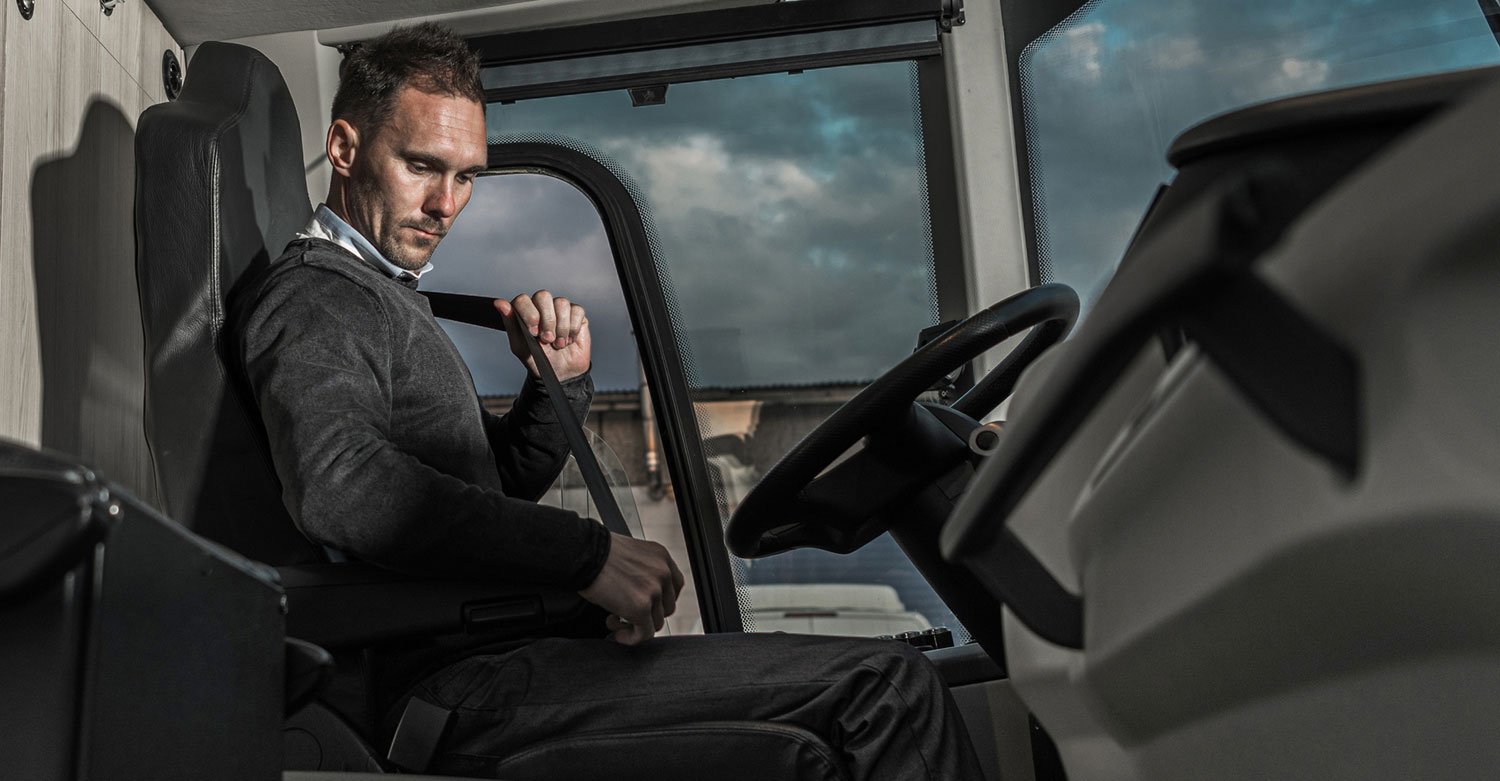
In an industry where safety, professionalism, and responsibility go hand in hand, seat belt use should never be optional. Commercial motor vehicle (CMV) drivers face unique risks because of the size of their vehicles, the miles they travel, and the driving environments they encounter. Fortunately, one of the most effective forms of protection is also one of the simplest: buckling up any time the vehicle is in motion.
Seat Belt Use Among CMV Drivers
Drivers who make their living behind the wheel understand that success on the road depends on preparation, awareness, and good decisions. Yet the latest available data shows that one in seven CMV drivers fails to wear a seat belt—a gap reflected in enforcement efforts.
Seat belt violations are among the most common citations issued during Commercial Vehicle Safety Alliance (CVSA) initiatives such as International Roadcheck and Operation Safe Driver Week. During the 2025 Roadcheck alone, more than seven hundred seat belt violations were issued—unmistakable evidence that noncompliance remains a problem across the industry.
This is especially concerning because research consistently shows that seat belt use dramatically reduces the potential for severe injury or death in a crash. The takeaway is simple: too many CMV drivers are still taking an unnecessary risk by operating unbelted.
Reasons for Buckling Up
The good news is that addressing that risk doesn't require new technology or complex procedures—just a consistent commitment to wearing a seat belt. Whether you’re navigating city streets or covering long stretches of highway, here’s why buckling up should be non-negotiable on every trip:
Maintain Proper Positioning
The road is full of variables no driver can fully predict—sudden hazards, changing weather, and split-second decisions by others. Wearing a seat belt keeps you properly positioned to react quickly and effectively, decreasing the possibility that a close call becomes something more serious.Reduce the Risk of Secondary Incidents
During a crash, being thrown from your seated position can quickly make a bad situation worse. A seat belt keeps you secure behind the wheel, making it easier to retain vehicle control and lessening the likelihood of additional collisions.Limit the Severity of Injuries
A seat belt plays a critical role in how your body absorbs crash forces. By securing you at the hips and across the chest, it distributes impact energy across stronger parts of the body, minimizing stress on more vulnerable areas like the head, neck, and abdomen.Stay Secure Inside the Vehicle
Being ejected from a vehicle in a crash makes you about four times more likely to be fatally injured. A properly worn seat belt helps keep you in the driver's compartment, where you are far better protected.Preserve Your Livelihood
A crash-related injury can take you off the road and affect your income. Buckling up is a simple habit that helps safeguard your health and ability to keep working.Avoid Violations and Penalties
Commercial drivers are required by federal law to wear a seat belt, and violations carry a severity weight of 7 under FMCSA’s Unsafe Driving Behavior Analysis and Safety Improvement Category (BASIC). Most states also enforce primary seat belt laws, meaning a citation can be issued without any other violation.Set the Standard Behind the Wheel
Consistent seat belt use reflects a safety-first mindset. It supports compliance with company policies and regulations while setting a positive example for passengers, coworkers, and others on the road.Support a Stronger Claim Outcome
Failing to wear a seat belt can complicate a claim, even when another party is at fault. It may lead to arguments that you contributed to the severity of your injuries, increasing scrutiny and potentially reducing recoverable damages.Make It Home After Every Trip
The goal of any trip is to arrive safely. In a crash, a seat belt can mean the difference between walking away and a life-altering injury—or worse. It's a simple action that helps protect your future and get you back to the people who matter most.
What’s the Right Way to Wear My Seat Belt?
Modern three-point seat belts are among the most effective safety tools available—but only when worn correctly:
Position the shoulder strap securely across the center of your chest and rib cage. Keep it away from your neck, but don’t let it slip off your shoulder.
Sit upright with your seat properly adjusted and avoid excessive reclining to minimize the gap between your shoulder and the seat belt.
Place the lap belt low and snug across your hips and pelvis, not on top of your stomach.
Ensure the belt lies flat and isn’t twisted. Remove any slack so it can function as designed in a crash. If you require additional length for a comfortable fit, contact the vehicle manufacturer about seat belt extenders.
Never place the shoulder strap behind your back or under your arm. Improper use can significantly reduce the belt’s effectiveness, putting you at greater risk in a crash.
A Simple Click, A Lasting Impact
Professional drivers encounter countless situations throughout their careers, and skill and experience play a key role in navigating them safely. However, even the most seasoned driver cannot predict every hazard or prevent every crash. A properly worn seat belt is one of the most reliable safety tools available, providing critical protection when the unexpected happens.
Start every trip with a click—buckling up takes only seconds, but its benefits can last a lifetime.
