
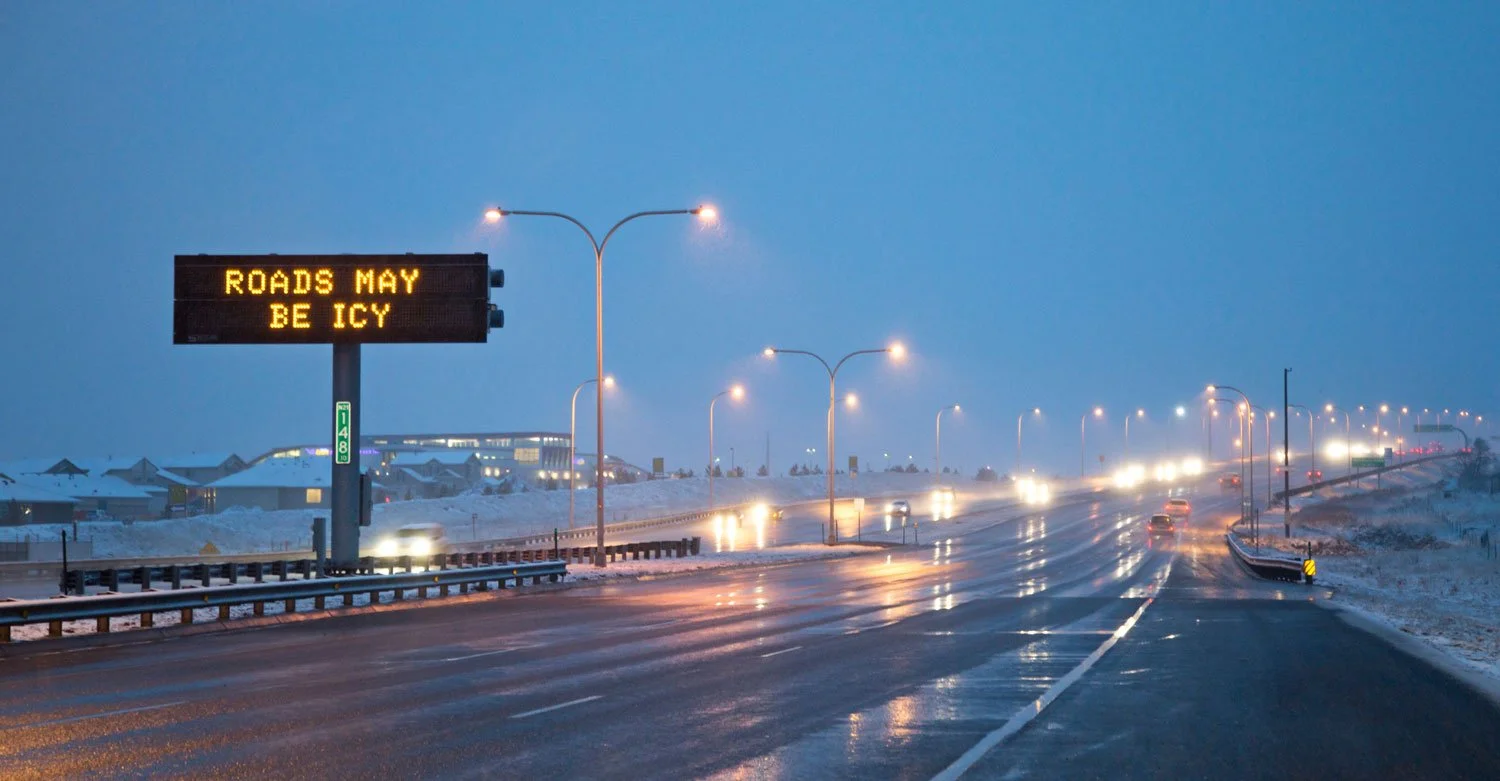
The holidays will be over in the blink of an eye, and before long, we will be deep in the heart of winter. While the road always carries risk for commercial drivers, the challenges of winter driving can be far more severe.
Understanding common winter weather dangers and knowing how to respond is essential to reducing accidents.
SNOW
Snow creates hazardous winter driving conditions by reducing visibility and traction, making acceleration, steering, and braking more difficult. As it accumulates, snow conceals lane markings, curbs, signs, icy patches, and even other vehicles. The danger intensifies at night or in low light when headlights reflecting off snow cause blinding glare. Heavy or blowing snow can reduce visibility to near zero.
SLEET
Sleet forms when partially melted snowflakes refreeze into small ice pellets before hitting the ground. These pellets bounce on impact, but during prolonged bursts they can quickly cover roads much like snow and create unexpectedly slippery conditions. Sleet also coats windshields and mirrors, further limiting visibility.
FREEZING RAIN
Freezing rain is among the most dangerous winter driving hazards. It falls as liquid rain but freezes instantly on contact with surfaces at or below 32°F. The resulting glaze forms first on bridges and overpasses, then spreads across roads, signs, and vehicles. Even a thin layer offers almost no traction and reduces visibility, while heavier accumulations can topple trees and power lines, blocking roadways and compounding risks for drivers.
BLACK ICE
Black ice is a thin, nearly invisible layer that forms when road moisture—commonly from melting snow or ice—freezes. Because it makes pavement look wet rather than frozen, drivers often don’t realize they’ve hit it until their tires begin to slide. It is most prevalent during early morning hours and tends to form on bridges, shaded areas, and untreated roads—making it one of the most deceptive hazards of winter driving.
FREEZING FOG
Freezing fog contains supercooled water droplets that freeze instantly on contact with cold surfaces, leaving a slick glaze as slippery as black ice. Beyond reducing visibility like ordinary fog, it clings to mirrors, windshields, and headlights, creating frosty buildup that makes winter driving visibility even worse.
SUN GLARE
Sun glare is an often overlooked yet significant winter driving hazard. Since the sun sits lower in the sky this time of year, especially during morning and late afternoon hours, it shines directly into drivers’ eyes. Snow, ice, and wet pavement reflect sunlight upward, intensifying glare and obscuring lane markings, signals, pedestrians, and vehicles.
RISK REDUCTION TIPS
Winter roads are unpredictable, so it’s important to refresh your knowledge of safe winter driving practices:
Plan ahead and stay informed. Check the forecast and road conditions before setting out and continue monitoring them during your trip as winter weather can change rapidly. Most importantly, if severe conditions are expected, do not hesitate to postpone your trip is safety is in doubt.
Turn on low beam headlights to see and be seen. Stop as needed to clear snow and ice from lights and reflectors and use wipers and defrosters to maintain maximum visibility.
Slow down, even on sanded or salted roads. Reducing your speed increases both traction and reaction time. Avoid using cruise control in adverse conditions to prevent losing control.
Leave much more space. Added distance improves visibility, helps you detect hazards sooner, and gives you room if you begin to skid or must stop.
Make smooth maneuvers. Gentle acceleration, braking, turning, and lane changing can help maintain traction. Remember to signal early so others can anticipate your moves.
Exercise heightened caution on bridges, ramps, overpasses, and shaded stretches. These areas freeze before others and remain icy longer, posing serious winter driving dangers. As you near them, reduce speed gradually and watch for pavement that appears glossy or slick.
Be careful on entrance and exit ramps. Sharp turns on slick surfaces can quickly lead to loss of control.
Keep well back from snowplows. They create large snow clouds that reduce visibility and conceal hazards. Remain patient, and pass only when it’s permitted, safe, and you can see the entire plow and its blade.
Steer clear of motorists with snow accumulated on their roofs—especially large commercial vehicles. Sheets of ice or snow can break loose without warning and create dangerous conditions for anyone following behind.
Stay alert to snow hypnosis, particularly after dark. Watching snow fall can create an almost trance-like effect that dulls your alertness. Keep scanning the road, shift your gaze often, and take breaks to stay sharp.
Combat sun glare. Wear UV‑blocking or polarized sunglasses, adjust visors, and slow down when driving into direct sunlight.
Monitor road cues. Silent tires or ice on side mirrors are warnings that the roadway may be freezing. Watch vehicles ahead—their movements can reveal trouble spots and give you extra time to respond safely.
Beware of other drivers. Not everyone adjusts for winter weather conditions. Watch for sudden or unsafe actions so you’re not drawn into someone else’s mistake or collision.
Know when to stop. If travel becomes too risky, pull over to the nearest safe and legal place and wait for conditions to improve. Stay in touch with your company dispatch for any additional assistance needed.
Winter driving requires patience, awareness, and a commitment to safety. By respecting seasonal hazards and following proven precautions, you can help protect yourself and everyone who shares the road all winter long.
